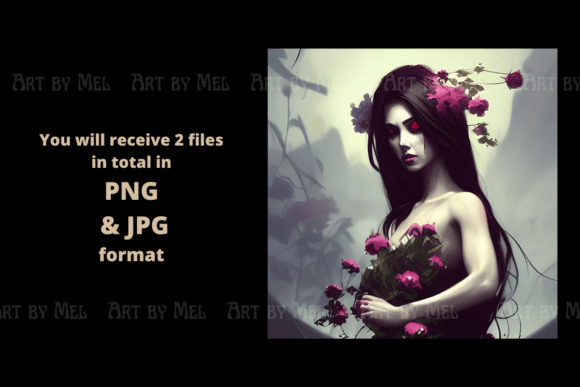
Floral Woman Digital Artwork: A Versatile Asset for Modern Creators
The creative landscape today requires not only inspiration but also high-quality, adaptable assets that can accelerate workflows and elevate final products. The Floral Woman digital artwork represents exactly this kind of resource. It is a stunning, high-resolution digital illustration featuring an elegant, stylized female figure intricately woven with botanical elements. The available files, a JPG and a PNG, are provided at 3000 x 3000 pixels and 300 DPI, making them ready for both digital and physical applications. This piece is not merely an image; it’s a foundational asset that can be integrated into numerous professional and personal projects, saving time and providing a consistent, beautiful starting point.
Integrating Floral Woman into Your Creative and Business Processes
Understanding where this asset fits into a broader workflow is key to leveraging its full potential. For many users, the initial stage of a project involves sourcing or creating core visual elements. This phase can be time-consuming and costly. Floral Woman arrives as a prepared, polished component. Its high resolution and dual file format (PNG with potential transparency support, JPG for universal compatibility) mean it is immediately usable. The first practical step in your process is often asset evaluation: checking resolution against your output needs, confirming the color profile works for your medium, and assessing stylistic alignment with your project’s tone. Floral Woman, with its ethereal and elegant aesthetic, passes this evaluation for a wide range of applications.
From Concept to Tangible Product: Practical Use Cases
The utility of Floral Woman becomes clear when mapped against specific project timelines and outcomes. Its role can appear at the beginning, middle, or end of a creative or business workflow.
For authors and publishers, it can serve as the initial visual anchor for a book cover. The workflow here involves integrating the artwork with title text and publisher logos in a design software like Adobe Photoshop or Canva. The 300 DPI resolution ensures that even for physical print, the image remains sharp and detailed, a critical factor in quality control. Similarly, for fan fiction writers or self-publishing authors, using this artwork eliminates the need for custom illustration commissions, streamlining the pre-publication process.
In marketing and entrepreneurship, the artwork can be introduced during the brand development phase. A small business owner creating a logo for a boutique, wellness brand, or event planning service might use the Floral Woman as a central motif. The process involves adapting the image—perhaps isolating a section, adding typography, and simplifying for logo versatility. The PNG format is particularly valuable here for easy layering against different backgrounds. Later in the business workflow, the same asset can be repurposed for social media advertisements or website graphics, ensuring brand consistency across touchpoints.
Optimizing Workflows for Physical and Digital Output
A significant advantage of this artwork is its suitability for both digital and physical outputs, which requires different preparation steps. Understanding this split is crucial for efficient implementation.
For digital applications—such as website banners, online advertisements, or digital planner covers—the primary considerations are file size and format. While the original file is large, it can be optimally resized for web use without losing quality. A typical workflow involves opening the file in your design software, setting the correct dimensions for your platform (e.g., 1200 x 600 pixels for a blog header), and exporting a web-optimized JPG. For use in digital stickers or overlays in apps like GoodNotes, the PNG format preserves clarity when placed over other elements.
For physical products, the 300 DPI at 10 x 10 inches specification is your guarantee of print-ready quality. The workflow for creating wall art, stickers, or merchandise like mugs and t-shirts involves collaboration with a print vendor. Your preparation step is simply to ensure your design file, which incorporates the Floral Woman artwork, maintains that high resolution. When adding text for invitations or merchandise, use a vector-based text tool in your design software to keep text sharp at any size. This attention to technical compatibility prevents disappointing output and supports long-term use of the asset for multiple print runs.
Streamlining Project Execution with a Single Asset
One of the most practical observations about using a versatile asset like Floral Woman is the efficiency gained through asset reuse. A blogger might use it for a series of post headers on floral themes. A freelance designer might employ it as a base for several client invitation designs. This reuse creates consistency and reduces the time spent searching for or licensing new images for every related project. Organization is simple: keep the master 3000px files in a dedicated "Master Assets" folder, and create derivative project files as needed. This method protects the original quality while allowing for unlimited project-specific adaptations.
Collaboration and Adaptation in Team Environments
Floral Woman also functions well in collaborative workflows. In a team setting, such as a marketing department or a wedding planning business, the artwork can be shared as a common brand asset. The clear, high-quality file ensures that every team member, regardless of their individual software proficiency, can work from the same high-standard visual. For educators or content creators creating course materials or printables, the artwork provides a professional aesthetic that enhances the perceived value of the material without requiring graphic design expertise from the creator. The process here is about accessibility: distributing the file via a shared cloud drive with notes on its technical specifications ensures smooth integration by all parties.
Ultimately, the Floral Woman digital artwork is a tool for simplification and enhancement. It fits into workflows by removing the initial obstacle of asset creation, providing a flexible element that can be molded to fit the later stages of design and execution, and offering technical specs that meet professional output standards. By integrating it as a core component of your asset library, you standardize quality, accelerate project timelines, and free up creative energy to focus on the unique aspects of your work—the message, the story, or the brand you are building around this beautiful visual foundation.